
Energy Champions: what Jeremy Carter and I learned from the front line
By Paul Webb MEI, Chartered Energy Manager, founder of the B2B Energy Network
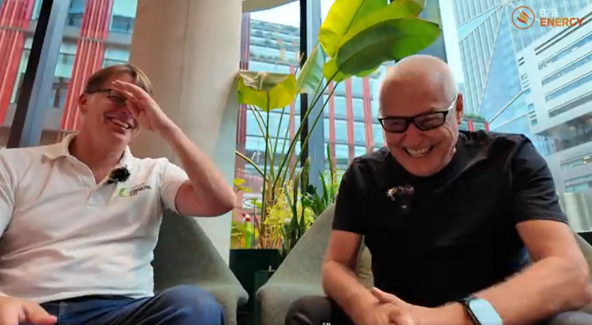
Jeremy Carter of Carter Energy Consulting and I meet regularly, sometimes over a coffee in Cambridge and sometimes in London, to swap notes on what’s working out on site. When we sat down to record our latest conversation, I suggested Energy Champions as the topic. Jeremy’s whole face lit up, and for good reason: that’s exactly where his own energy career began.
Back in the late 1990s, the energy manager at the local authority Jeremy worked for sent an email to staff across around 150 buildings, calling for volunteers to become Energy Champions. Jeremy put his hand up for the leisure centre where he worked. Six or seven Champions came forward, and they set up a shared email group to swap ideas. That simple network of people noticing and sharing is the heart of what an Energy Champion scheme should be.
Three wins from one leisure centre
The vending machines. The first thing Jeremy noticed was that the vending machines ran around the clock, even though the building was closed for hours every night. He put power monitors on them and was, in his words, horrified by what they used. Simple timers followed, switching them off between 10pm and 6am. That cut a third of their running hours, and when Jeremy reported back to the council, the centre’s night-time consumption had dropped by around 10%. The timers were cheap and the team fitted them themselves, so the payback was excellent.
I’ve got a vending machine story of my own. I once put a logger on one while I walked round a client’s building with the owner. When I showed him the results he disappeared mid-meeting and came back with the plug in his hand. He’d cut it off.
The swimming pool backwash. The staff followed a laminated procedure that said to backwash each pool filter for six minutes. Nobody was watching the sight glass, which shows when the water runs clear. When Jeremy checked, the glass was clear after four minutes. Every backwash was wasting two minutes of pumping and water simply because “that’s the way we’ve always done it”.
The swimmers. Jeremy’s team asked swimmers to shower before getting in the pool, not just afterwards. Cleaner swimmers meant the pool could run at a lower chlorine level, with fewer chemicals and fewer complaints about sore eyes. As Jeremy pointed out, pools in Scandinavia and Germany run at much lower chlorine levels for exactly this reason. It shows a Champion’s influence can reach beyond the staff to the public too.
What makes a good Champion
Jeremy firmly believes a good Energy Champion is a connector. They need to communicate well, because their job is to show colleagues how to behave and how to operate equipment so energy isn’t wasted. I’d add two more qualities: they need to be able to influence their team, and they need to be passionate about it, the kind of person who saves energy at home without being asked.
That raises one of the most interesting points of our conversation. Jeremy has known plenty of people who are careful with energy at home but not at work, simply because at work it isn’t them paying the bill. Peer pressure plays a part, and so does morale. If staff morale is low and you ask people to go round switching off lights and closing doors, you’ll find it far harder going. A Champion has to read the room as well as the meter.
Empower them, then hold them accountable
A good Champion is only half the story. The organisation’s values have to line up with theirs, and the most important of those is empowerment. Jeremy’s council bought him data loggers and gave him room to try things. Champions won’t always get it right, but as Jeremy says, you learn more from your mistakes than from your successes.
Data is what gives a Champion a voice. I once worked for a blue chip company where four sets of escalators at the back of the building ran all day, even though almost everyone came in through the front and took the lifts. We logged them and put the numbers to the facilities manager. He didn’t just agree to cut their hours, he switched them off altogether unless there was an event on, saving thousands. Jeremy made the point that the savings go beyond energy: escalators are maintained on running hours, so fewer hours means less maintenance, fewer worn bearings and a longer life. That’s whole life cost thinking. There was a twist, though. The press got hold of it and accused the managing director of penny pinching. It’s a reminder that savings need explaining as well as making.
The flip side of empowerment is accountability. Jeremy chairs a quarterly Energy Champions meeting at a large organisation he works with. It’s a chance to share ideas, but it also holds everyone to account: here’s the project we identified, where are we with it, has it been signed off, has work begun? He’s also seen the opposite. Organisations have appointed Energy Champions without explaining the role or what was expected, and the people did nothing. Good intentions, but a token gesture. The main cause, in Jeremy’s view, is a lack of strategic leadership from the top.
Where to start
Jeremy believes the hardest thing in life is making a start. His framework is simple: where are we now, where do we want to be, and how are we going to get there? Always be clear on what you’re trying to achieve and how it fits with your organisation’s goals, then set targets to match.
For me, everything starts with review. Use your empowerment to get hold of the bills and start taking meter readings. It costs nothing, and you can’t manage what you don’t measure. Low cost plug-in monitoring tools, like the Panoramic kit Jeremy and I both use, then let you see the spikes and the waste as they happen.
An energy audit from someone like me is a snapshot of one day in the life of a building. People switch the lights off when they know the energy manager is coming, and when we leave, things slowly drift back. A Champion on site is there all year round, at far lower cost, with more influence and more impact. Like any awareness campaign, though, the message needs reinforcing regularly to keep it alive.
Advice for organisations
Appoint Energy Champions and see how far they can take you. Jeremy calls a well coordinated team of motivated people one of the most cost effective ways to cut energy use. Choose carefully: the right person is often already in your building, and you may well have spotted them. Recruit well, train well, and review how the training is working. And remember the benefit goes both ways, because people who learn to save energy at work save money at home too.
A message to every Energy Champion
Jeremy’s message was two words: keep going. There is a huge amount of energy wasted, and every bit of waste you remove reduces demand.
One of Jeremy’s favourite tips is a night-time visit to your building. Why is that office being air conditioned at 11pm when everyone went home at five? On one of my own night audits I found a big screen in an empty canteen showing the news to nobody. Jeremy calls this ghost energy: consumption nobody knows is happening, which only night visits and real-time monitoring will find. I saw the same thing walking through a closed shopping centre early one day, with shop lights blazing and children’s rides switched on. Jeremy’s question for any organisation is: do you know how much energy you’re wasting? He has never had a good answer.
Jeremy and I plan to record more of these conversations. In the meantime, I’d love to hear from you. Are you an Energy Champion, or do you have Champions on your sites? What’s your ghost energy story? Share it below, and you can find more on building Champion skills through the B2B Energy Academy.